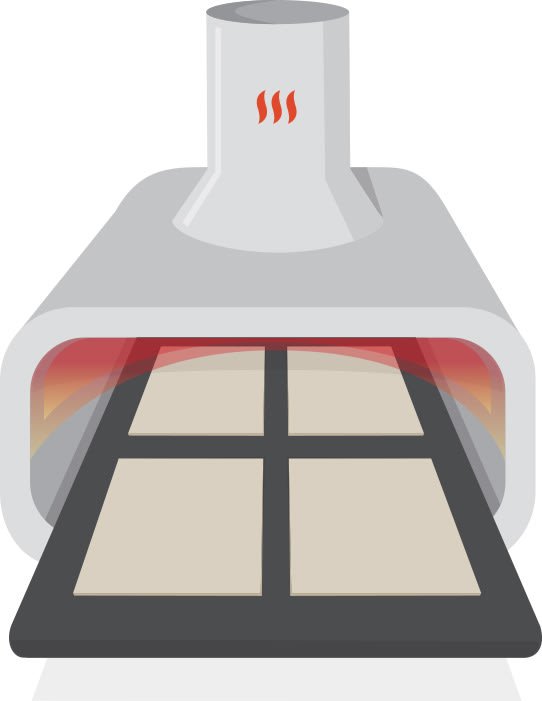
Mix & Grind
Just like cooking at home, a quality tile requires just the right mix. Raw ingredients and water are combined with grinding beads in a large mixer to create the perfect consistency.
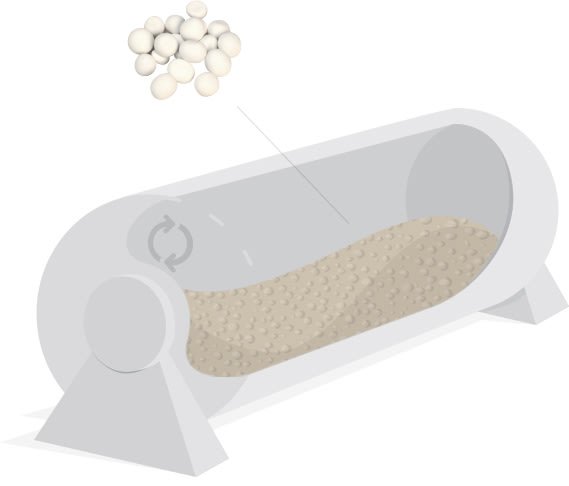
Dry
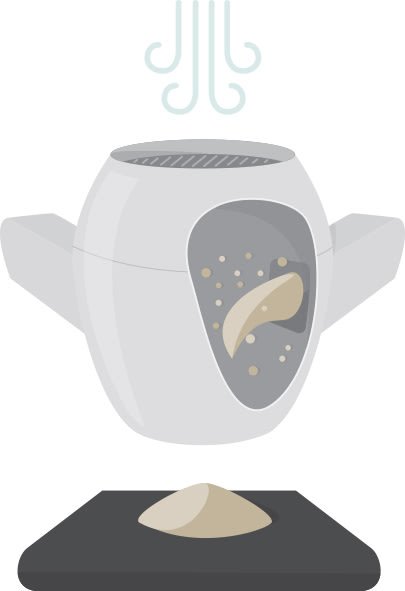
Before the tile can be formed, some of the water needs to be evaporated in a dryer. Removing water from the mix creates a harder and therefore more durable tile.
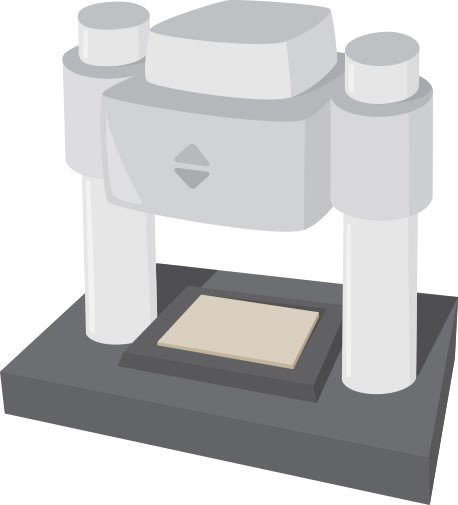
Form
The ingredients are pressed into a template at over 5,000 pounds per square inch. The extreme pressure solidifies the tile and gives it the strength that it's known for.
Dry
The tile is dried again to remove more water. Tiles made with small amounts of water are less likely to crack in freezing temperatures.
Glaze and Screen
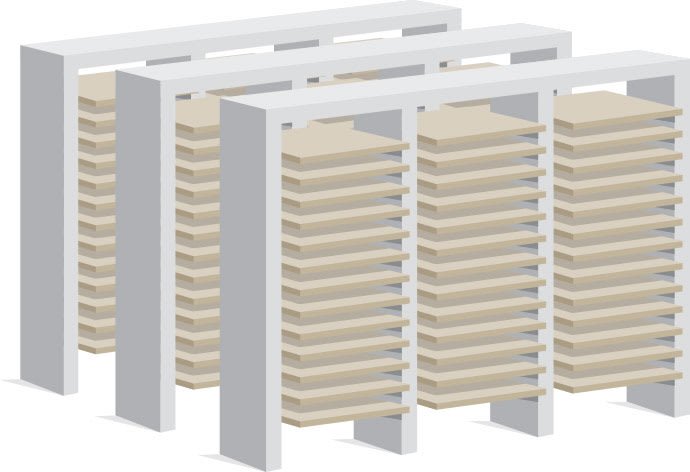
It's time for the finishing touch! A finish is painted on, giving the tile a distinctive pattern, and a glaze is applied for stain resistance. However, not all tile is finished or glazed. You can learn more below.
Bake
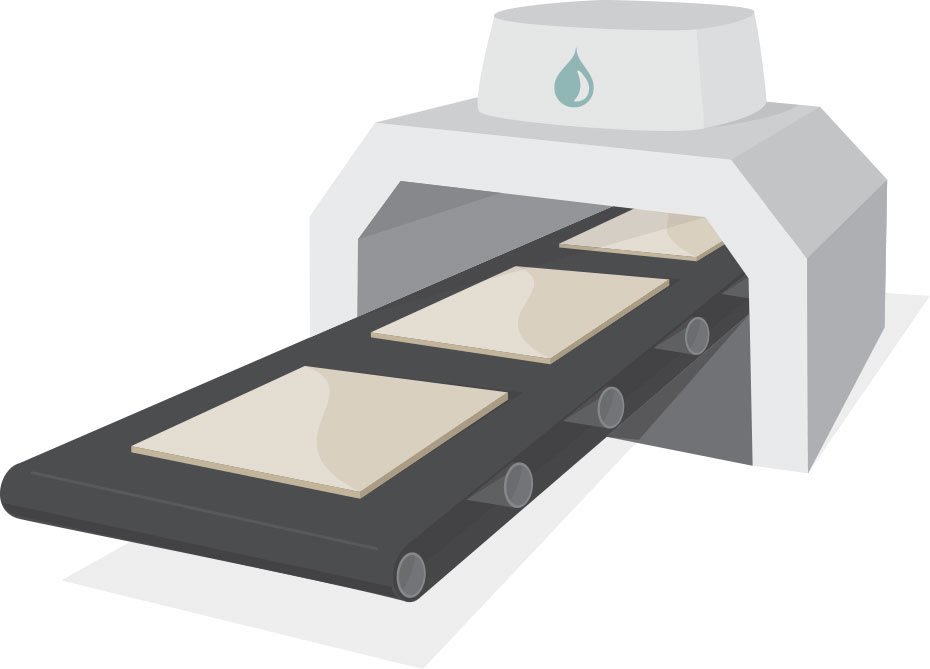
Finally, the tile is baked at a scorching 2,500 °F to set the glaze and remove more water. Much like baking at home, different tiles require different baking times and heat.